
Emergency Tips and Techniques That Could Save Your Dog’s Life
1. Know your dog: Changes in behaviour such as change in appetite, bowel movements and even smell can indicate that there is something seriously wrong with your pet. Know the key indicators to look out for so that you can act quickly.
2. Know how to check for a pulse: The easiest place to find the dog’s pulse is in the upper third of their thigh. Place your hand over the top of their thigh and gently squeeze your fingers just underneath their leg. You should be able to feel the artery pulsing at this point. (your thumb has a strong pulse itself so don’t use this to take their pulse, otherwise you will be timing your own pulse rate!). Time the pulse for 15 seconds and then multiply the result by 4 in order to calculate the number beats per minute.

3. Know how to keep yourself and your pet safe:
Know the best way to muzzle your pet: Even the gentlest dog is likely to bite if it is frightened or in pain. Human safety always comes first; however, you should never muzzle an animal that is overheated (as they will need to pant to cool), that is having difficulty breathing or is likely to vomit.
Ensure you have a safe way to transport your pet to the Vet. Ideally have their own crate or cage that they are happy and confident being transported in, with their own blanket and toys. Practise putting them in the crate when they are fine, so it isn’t a scary experience for them if they are unwell.
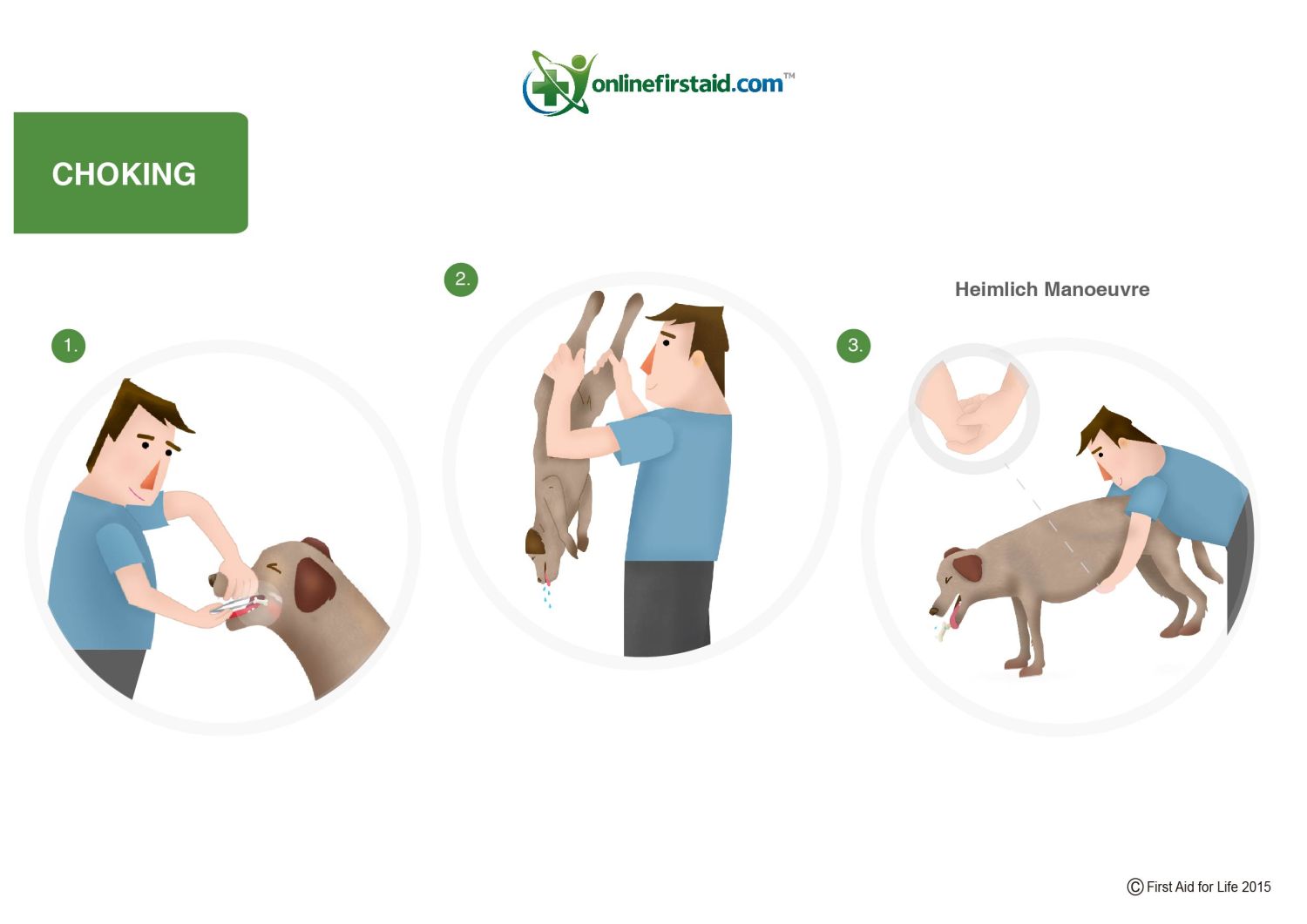
4. Know how to help your choking dog: Choking occurs when something blocks the airway. When the airway is partially blocked the animal may start retching, pacing back and forth and pawing at their mouth. If their airway becomes totally blocked they will be unable to make any sound at all. Dogs can choke on anything, from plastic bags, balls, socks, toys or anything they can get hold of, if it goes down the wrong way it may leave them unable to breathe. It is important that you spot these signs and then know how to act fast to dislodge the obstruction.
Click here to read a guide on how to help your choking pet.
5. Know how to administer CPR: If your dog has stopped breathing, call a vet straight away, however you may need to perform CPR to increase your dog’s chances of survival.
Click here to read how to give your pet CPR
It is strongly advised that you complete an online or attend a practical first aid course to understand what to do in a medical emergency. Visit http://www.FirstAidforPets.net or call 0208 675 4036 for more information about our courses.
First Aid for Pets provides this information for guidance and it is not in any way a substitute for medical or veterinary advice. First Aid for Pets is not responsible or liable for any diagnosis made, or actions taken based on this information.