
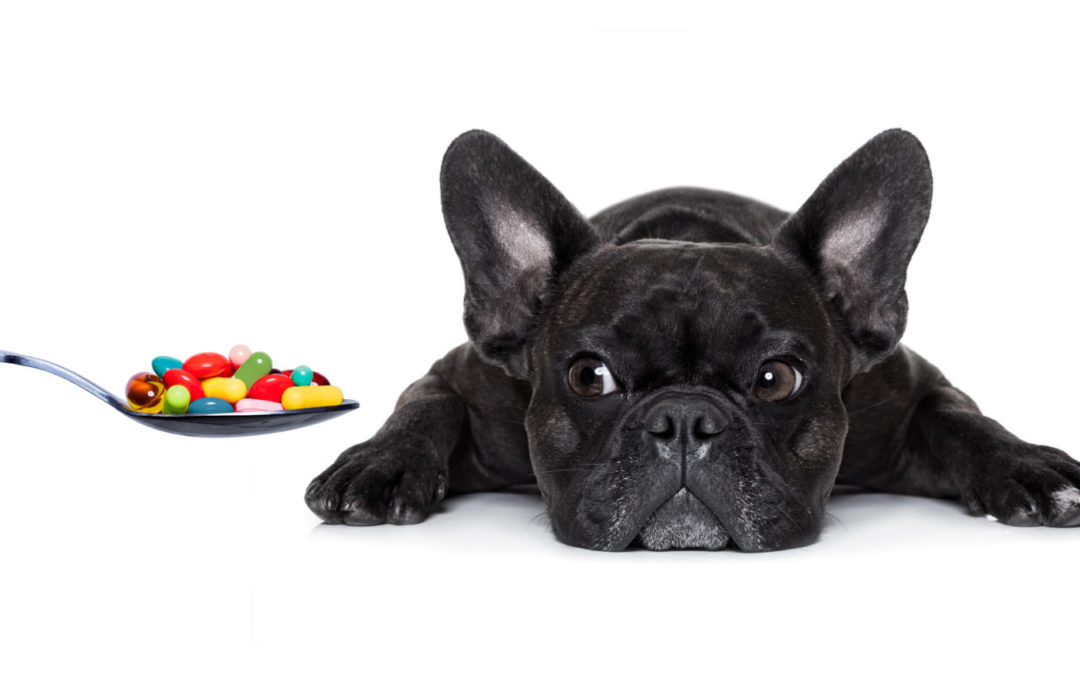
Medicating your dog – top tips to help
When your dog is unwell, it can be distressing for both of you, especially if the vet prescribes medication that you know they aren’t going to enjoy taking. However, it is important to remember that medicine is only ever prescribed with the best interests of the animal in mind, so making sure your dog takes the correct medicine, and does so properly, is of utmost importance.

What to ask/tell your vet when your dog is prescribed medication
- Always ensure your vet knows if your dog has adversely reacted to any medications in the past and make sure you know what signs to look out for if they were to develop an adverse reaction this time round
- Tell them about any other prescribed medications or over the counter products you may also be giving your dog
- Make sure you know about the medication being prescribed
- When and how should it be used?
- What is it being used for?
- What you should do if you miss a dose or accidentally give too much
Once you know that you have the correct medication, here are some top tips on how to help your dog take it. It may take a bit of time, but with some patience and practice, you should find the perfect method that works for both of you.
Hiding Your Pet’s Medication in Food
A good way to administer your dog’s medication is by disguising it in food that they cannot resist. Spreads or moist foods can not only disguise the pill but can also help your pet swallow pills more easily. It is important, however, that only a small amount of food is used so that it does not require chewing in order to be swallowed, as breaking pills up can affect the way they work.
Other Ways to Give Medicine to Your Pet
Sometimes disguising the medicine doesn’t work, with dogs often quickly realising that a pill has been concealed in their treat, meaning they spit it out immediately. Some medications are now supplied as chicken or beef flavored pills, which may do the trick, so it’s always worth asking your vet if they are a possibility. Remember though – if your pet finds them too delicious, they may want to eat them all, so they must be kept totally inaccessible, as you would with medicines and young children.
If flavoured pills aren’t an option, you could also try putting the pill directly into their mouth. If you are unsure though, ask your vet for guidance on how to do this. Your own safety is the priority, so if your pet starts to growl or you think you may be at risk of them biting you, stop immediately.
Liquid Medicines
Liquid medicine may be easier for you to administer than pills, so it may be worth asking your vet if the medication your pet requires is available in liquid form. If it is, follow these steps to help you administer it correctly:
- Draw up the correct dosage of liquid medicine into a medicine dropper or syringe, and then gently place this in your pet’s moth, between their gums and their cheeks.
- Raise their chin up, pointing their head towards the ceiling and very slowly push the medicine through the syringe and into their mouth. Make sure you allow them to swallow as you go, should they need to.
- Continue to give them the medicine in this way, until they have swallowed the complete dose.
Eye Medication
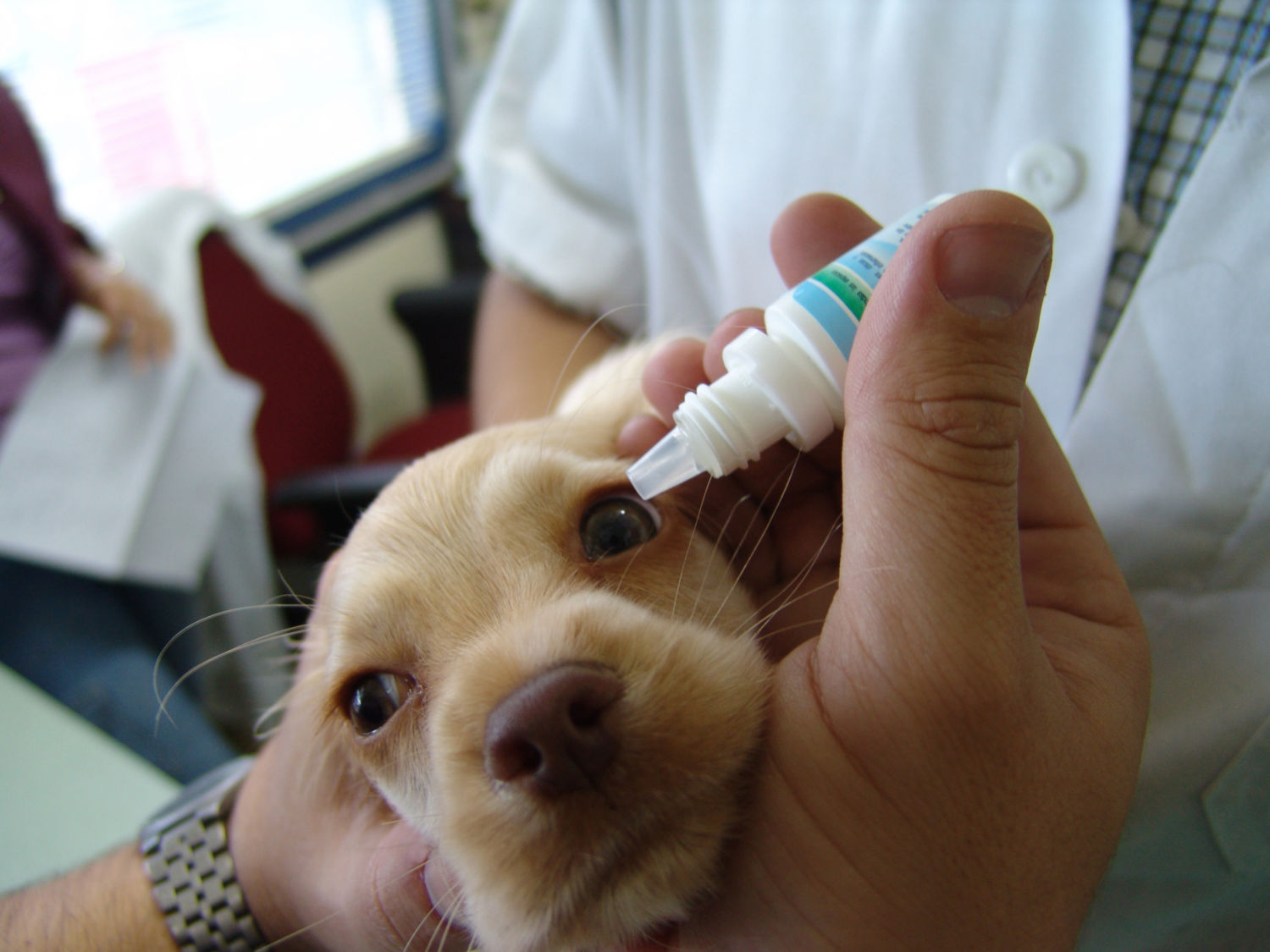
Eye drops can be particularly hard to get in the right place, especially if you have a lively dog, so for this you may well want to get someone else to help reassure them and hold them still as follow these steps:
- Use your non-dominant hand to hold their eyelids open (this is because you’ll need your dominant hand to deliver the eye drops as precisely as possible)
- With your dominant hand, hold the tip of the eye drops applicator approximately 1cm above their eye, ensuring you don’t touch their eye at any stage.
- Squeeze out the correct number of drops/amount of cream and allow their eyelids to close.
- To make sure the medication covers their entire eye, whilst their eyes are closed, gently massage their eyelids.
Ear Medications
Your dog may be given medicated drops for an outer ear infection and these can be tricky to administer correctly too, so follw these steps:
- Hold your dog’s ear as open as possible, gently pulling up from the base of the ear in order to straighten their ear canal.
- Take the ear drops and gently put the tip of the bottle or tube into their ear and squeeze in the correct number of drops.
- If your dog is suffering from an ear infection, they may be particularly sensitive, so when you massage the base of the ear in order to spread the medication through the ear evenly take extreme care.
Also always remember the following:
- Always follow the instructions that come with the medication carefully.
- Never give a pet medication intended for a human or other pet.
- Keep all medication out of reach of children and pets.
- As with antibiotics in humans, pets must finish the course of medication prescribed, unless you are advised otherwise by your vet.
- Dispose of all medication that has expired or remains unused.
- Never re-prescribe medicine yourself, even if you think your dog has the same problem as before. Your vet is the only person who can make that decision.
With all this information at your fingertips, we hope that the next time you have to medicate your dog, it goes without a hitch!
First Aid for Pets provides this information for guidance and it is not in any way a substitute for veterinary advice. The author does not accept any liability or responsibility for any inaccuracies or for any mistreatment or misdiagnosis of any person or animal, however caused. It is strongly advised that you attend a practical First Aid for Pets course or take our online course to understand what to do in a medical emergency.
Please contact emma@firstaidforpets.net or https://firstaidforpets.net