

Essential preparation for your new puppy
Getting a puppy is an exciting event. However, as any new parent knows there is a lot to consider when welcoming a new member into your household. Follow our top tips to help your puppy quickly settle into your family and to get them off to the best start in life.
New start
Puppies are able to leave their mothers from around eight weeks old. In the very early weeks (up to eight weeks) your puppy should be vaccinated, have started start toilet training and started socialisation.
Before your pet comes home
Think about preparing a safe space for the puppy to play in and toys to stimulate them.
Invest in a bed or crate where your puppy can rest. Position this in a quiet, draft free area of your home. This crate will be their safe space so it needs to be comfortable and quiet; large enough to allow the dog to stand up and turn around.
Also, remember to register with a vet, enrol in some puppy classes and research pet insurance.
Puppy proof
Make sure your home is puppy proof by looking at it from puppy level. At a puppy’s line of vision, you will be amazed at how much you can see that could be harmful to your new pup, like loose electrical wires, scattered objects etc.
In the garden, protect your plants by fencing them off, and removing the ones that are poisonous to dogs. They can be found here.
When collecting your pet
Take a comfortable dog carrier that is the right size for your puppy.
Additionally, take a cosy comfort blanket. Ideally give this to the puppy a couple of days before you bring them home, so that it is familiar to them and you can transfer it into the dog carrier to help them settle in.
Furthermore, include spare bedding/an incontinence mat as your puppy will not be toilet trained and if they are nervous they may urinate more frequently.
Bring some food and water.
It is also a good idea to bring a new toy, ideally given to them a few days before they come home with you.
Getting your puppy used to their carrier
Your new puppy may be nervous about being removed from its mother, siblings and familiar environment.
Minimise loud noises and excitement. For this reason it may be better not to bring small children to collect the puppy, as they may be very excited.
Leave plenty of time to settle your puppy into their carrier.
Don’t handle the puppy too much if it’s nervous. However, if the puppy shows signs of distress sit quietly and reassure them
How to check your puppy is healthy
A healthy puppy has a shiny coat and is well-covered and not skinny. Check they look happy and healthy; that there is no discharge from their eyes or nose, no black wax in their ears and that they don’t have a cough. Further, their bottom should be clean.
Pedigree puppies
If the puppy is a pedigree, research potential health problems and ask the breeders for proof that the parents have been tested and are not potential carriers.
Vet
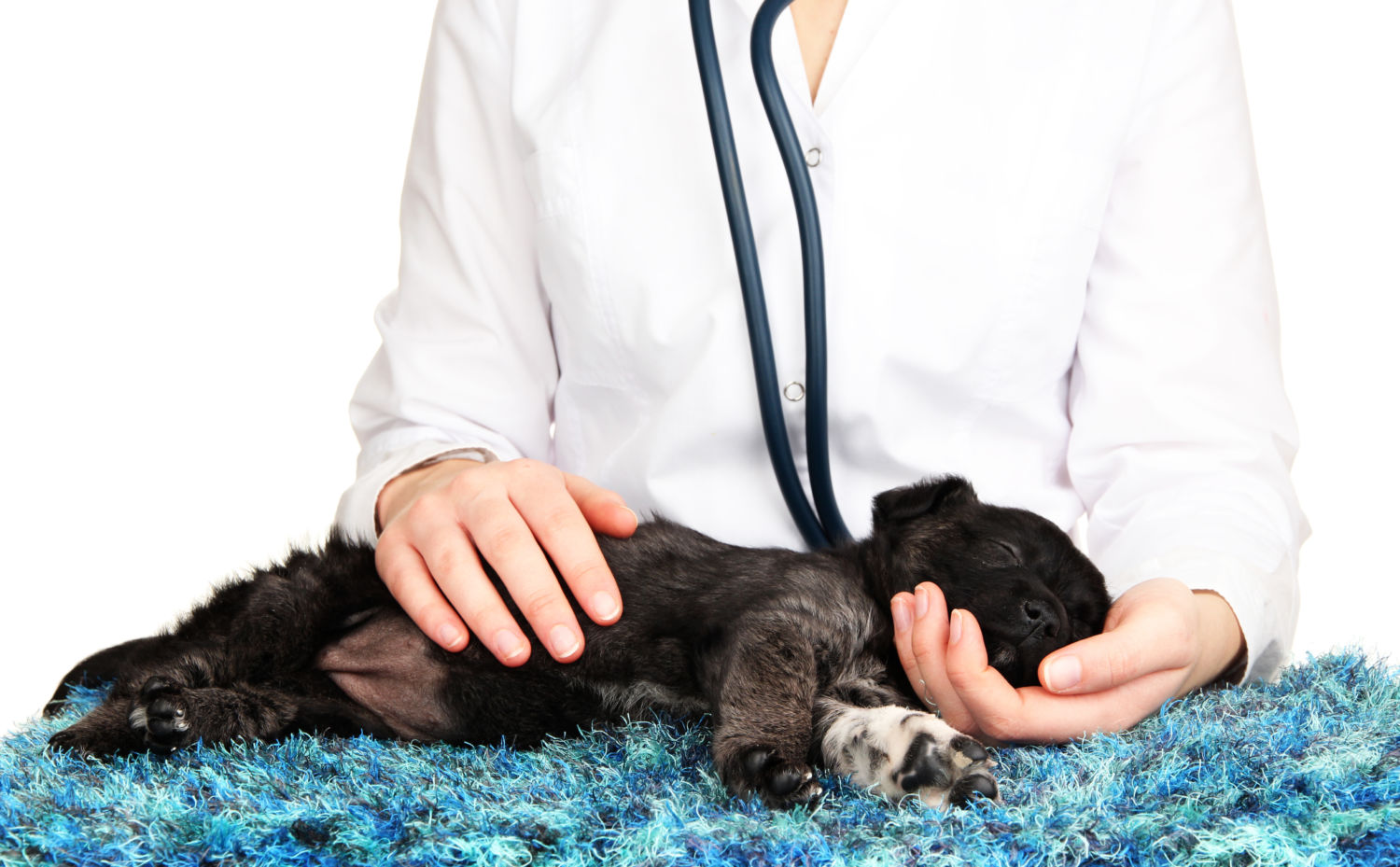
Register with a vet and take your puppy for a check-up as soon as possible. If the vet spots any health problems, immediately contact the breeder or charity you got the puppy from.
There will be some key vaccinations that your puppy needs to keep them healthy and safe, which your vet will tell you about. They can also be found here.
Feeding your puppy
Puppies are able to leave their mothers at around two months old. Have a discussion with the breeder or charity about what they are usually fed. Continue with the diet they are used to at first, and introduce any new food gradually.
Always use food suitable for the puppy’s breed and size. Several small meals are better than fewer large ones. Always make sure fresh water is available. Never give dogs milk. Always follow the manufacturer’s instructions when feeding, and do not allow your puppy to become fat – obesity is a problem for dogs just as much as for humans.
Read our article on poisoning in dogs or download our free e-book – find out which human foods can be poisonous for dogs. Human chocolate can be particularly hazardous for dogs read our piece here.
Sleeping arrangements
The best place for your puppy’s bed is likely to be a draught-free corner of the kitchen. Kitchens are usually warm, with washable floors. It is important to teach children to be sensitive to the puppy’s needs; never allow them to drag a tired puppy out of bed to play.
Settling in
On the first few nights in your home, expect your puppy to whimper, but after the first few nights, the pup should soon start to settle in quite happily. Take your puppy out to the garden to go to the toilet and gently praise when it happens.
Be sensitive
Without a doubt, puppies are sensitive to loud noises and sudden movements. Limit visits from children to just a few minutes for the first day or two. Moreover, be sensitive to the needs of your puppy, and ensure they are able to get away somewhere peaceful if they need to. An exercise pen can prove a great safe bolthole for them to be near you, but remain safe.
Start a bathroom routine
Create a designated area for bathroom activities. Every time your pup urinates, take them to that area. They will soon get the idea and will start going there themselves.
Things to buy
- Puppy food
- Water Bowl
- Collar and leash
- Cleaning agents
- Toilet rolls
- Grooming accessories
- Puppy chew toys
- Flea and tick repellents
- A crate, carton or basket for new pup
Puppy safety and legal requirements
It is essential that your puppy has a collar and tag and is micro-chipped. Micro-chipping, collars and tags are a legal requirement for all dogs and puppies over eight weeks. Remember to regularly check the fit of their collar as puppies grow quickly and you don’t want the collar to become too tight.
You should take your new puppy to the vet as soon as possible, who will give a thorough check to see that all is in order. Your vet will make a vaccination schedule and give you some basic advice on parasite control, and how to check for signs of illness.
Learn to examine your dog from an early stage as when you know what is normal for your pet. This will make it much easier to quickly spot if something is wrong.

Register for our free dog choking course here: https://firstaidforpets.net/free-dog-choking-course/
Download our free e-book on Essential First Aid information all dog owners should know here
About Us:
First Aid for Pets provides this information for guidance and it is not in any way a substitute for veterinary advice. The author does not accept any liability or responsibility for any inaccuracies or for any mistreatment or misdiagnosis of any person or animal, however caused. It is strongly advised that you attend a practical First Aid for Pets course or take our online course to understand what to do in a medical emergency. Please contact emma@firstaidforpets.net or https://firstaidforpets.net