


Accidents happen, and cats, being curious and agile, can sometimes end up with broken bones or dislocated joints. Understanding how to recognize the signs and respond appropriately can make a big difference in your cat’s comfort and recovery. This article will help you identify potential fractures or dislocations in your cat and explain the basic steps you can take before getting professional care.
How do you know if they have broken a bone?
The honest answer is that if you can’t see the bone sticking out or if the limb is at an unusual angle, you can only confirm a broken bone with an X-ray. A fracture is another word for a broken bone.
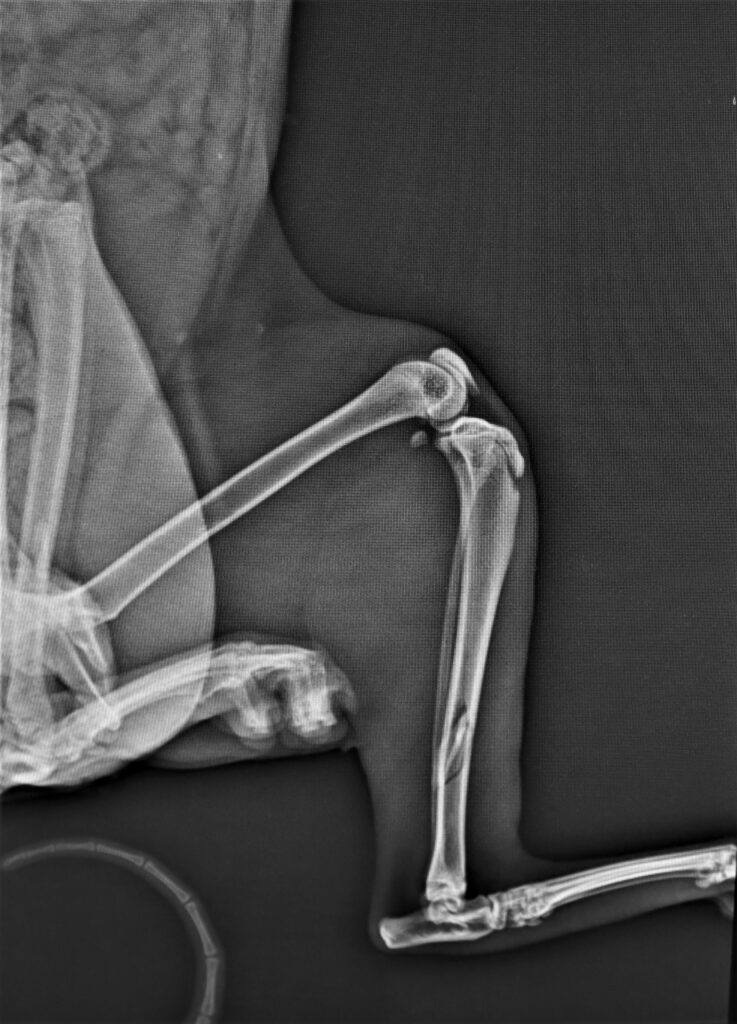
Other possible signs:
- Pain – it hurts.
- Loss of power, it can be hard to move a broken limb.
- Unnatural movement – the limb may be at an odd angle and have a wider range of movement than it should have.
- Swelling, bruising or a wound around the fracture site.
- Deformity – often limbs may be shortened, or the broken area could have lumps and bumps or stepping (with an injured spine it is uneven as you gently feel down their back)
- Irregularity – lumps, bumps, depressions, or stretched skin
- Crepitus – the grinding sound when the end of bones rub against each other
- Tenderness – pain at the site of injury
Important things to note with fractures
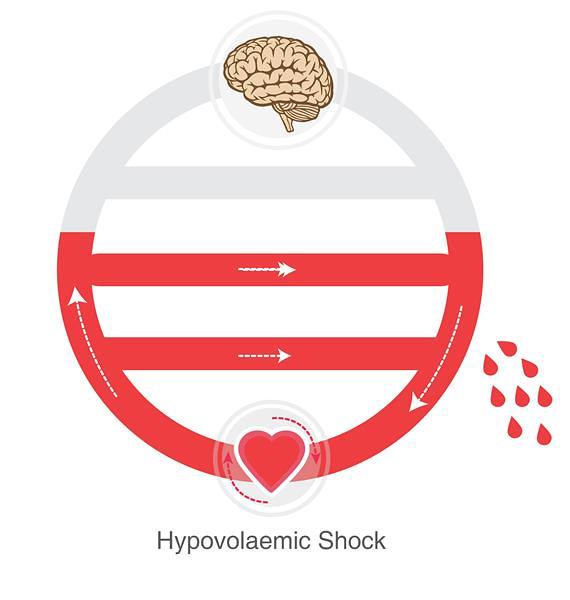
Broken bones on their own, rarely cause fatalities. However, if the injury is accompanied by severe bleeding (either internal or external), it can cause the casualty to go into shock. Shock is life threatening.
If you suspect a fracture
1 – Do not attempt to reposition the injured limb.
2 – Keep your pet warm and dry and be aware that pain and stress will adversely affect their condition.
3 – If you are at all worried about them, phone your vet.
Types of fractures
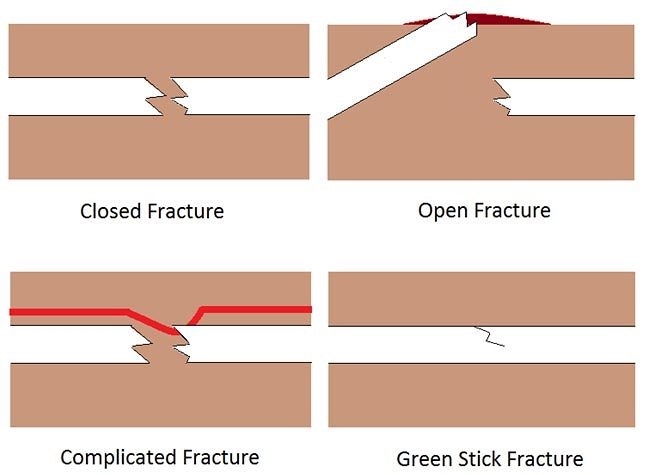
Open fractures – If the bone is sticking out, the bone is broken! If your cat has a fracture, phone for veterinary advice. Be very aware of the onset of shock. Keep them warm and dry, and do not move or reposition the injured limb.
Complicated fractures – With complicated fractures, muscles, nerves, tendons and blood vessels could be trapped and damaged. Keep them calm, warm and as still as possible and phone your nearest vet. Do not attempt to splint or bandage the injured limb as you could make things worse.
Closed and greenstick fractures – The only sure way to tell if the bone is broken is to get it X-rayed.
Treating fractures
- Protect yourself and the animal from any further danger.
- If you suspect that your pet has broken a limb. Do not try and reposition the limb and only apply a bandage if there is profuse bleeding that you need to control.
- Move the limb as little as possible.
- Make the animal as comfortable as possible and safely transport them to the vet for an x-ray.
- Do not try and splint the limb, just comfortably transport your pet as quickly as possible.
Dislocations
A dislocation occurs when the bone is pulled out of position at a joint. This can also be accompanied by other tissue damage. Always go to a vet to replace a dislocated joint. Never try to put it back yourself, as you could cause further damage and trap nerves or blood vessels.
Signs and symptoms
They may have:
- Difficulty moving the joint, pain and stiffness
- Swelling and bruising around the joint
- They are likely to be asymmetrical, with one joint looking deformed and out of place
- There could be shortening, bending or twisting of the joint
Treatment
- If there is a risk of your cat biting muzzle it for everyones safety
- Support the injury to avoid unnecessary and painful movement.
- Never try to reposition the limb yourself.
- Look out for signs of shock.
- Phone the Vet and transport them carefully to your local Veterinary Clinic.
- Do not allow them to eat or drink as they may need a general anaesthetic.

First Aid for Pets provides this information for guidance and it is not in any way a substitute for veterinary advice. The author does not accept any liability or responsibility for any inaccuracies or for any mistreatment or misdiagnosis of any person or animal, however caused. It is strongly advised that you attend a practical First Aid for Pets course or take our online course to understand what to do in a medical emergency.