

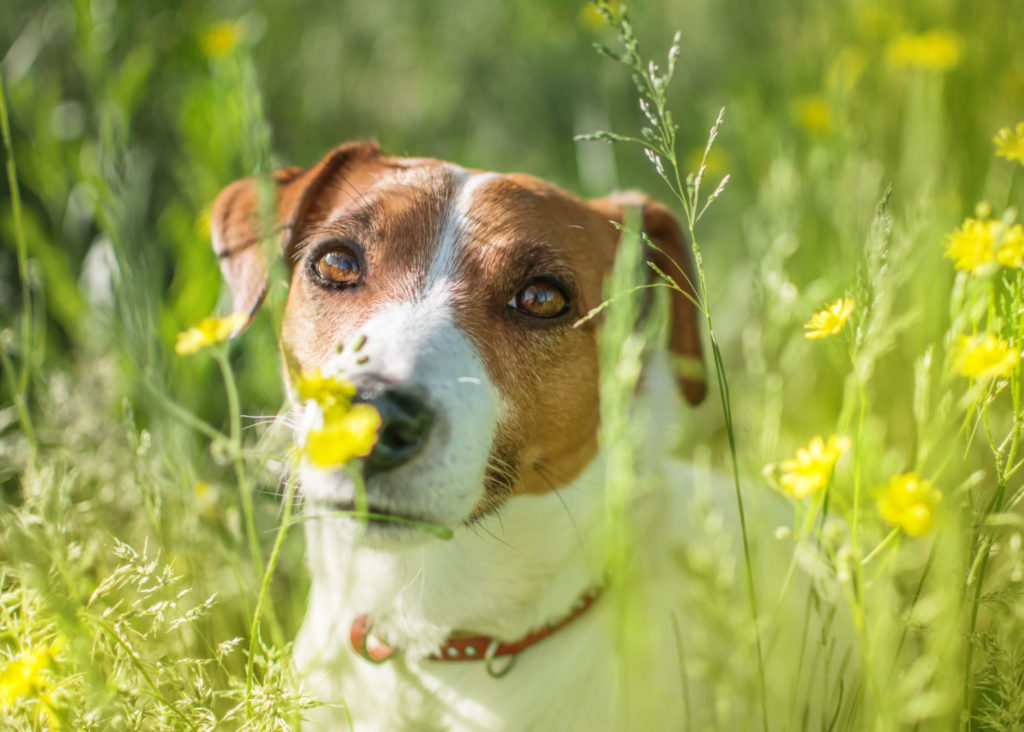
It’s that time of year when dog owners need to be aware of the painful and hidden dangers of flowering grass seeds.
This is because flowering grass seeds can cause injury and distress to your pet by getting in your dog’s eyes, ears, paws and under their skin.
Dog’s paws are most affected by grass seed
The most common part of dogs to be affected is the foot. If your dog suddenly starts to limp or licks their paw constantly, they may have a grass seed lodged in between their toes. They may hold their leg up and limp to avoid standing on the sore paw. The grass seeds can be very painful for your pet and lead to infection, they need to be removed as soon as possible.
Check: A seed can become caught in the feathery fur around the paw and easily find its way into the dog’s sensitive pad.
Ears are the second most commonly affected part by grass seed
This is because the shape of the ear enables the grass seed to work its way from the fur on the dog’s ear, down the ear canal to the sensitive eardrum.
Check: If your dog suddenly paws repeatedly at their ear or shakes their head vigorously after a walk, check them over for seed heads. If it is easy to spot and remove, then you can take it out yourself, however if it has worked its way down the ear, you should visit your vet.

Noses can be affected by grass seed too
If your dog suddenly starts to sneeze violently or rubs his face on the ground, he may have a seed head in their nose.
Check: their nasal passages for any offending seed heads. You may need veterinary help to remove it.
Grass seeds are particularly bothersome if they end up in the eyes
If they end up in your pet’s eyes, they can cause considerable distress. If it is easy for you to remove them, do this as quickly as possible – you may need urgent veterinary help.
Where are pets most likely to find these grass seeds?
These grass seed heads are very common in the countryside and woodlands. However, they are common in city parks and commons too.
Season for grass seeds
They are plentiful during the spring and summer months. Furthermore, they are easily brushed off the grass stems as the dog knocks against it.
Arrow action of grass seeds
The seed heads act like tiny arrows easily attaching to your dog’s fur and piercing their skin.
Mostly the seed heads end up in your pet’s ears and paws, but eyes and noses can be affected too.
Most at risk
Breeds of dog with hairy ears and feathery feet are more at risk from this common summer hazard.
Also at risk, are dogs who simply love romping through long grass.
Prevention is key
Minimize the chance of seeds piercing the skin and make seeds easier to spot and remove by keeping hair clipped around the dog’s ears, eyes and paws.
Do remain vigilante and check your pet after walking the countryside. Remove any grass seeds you see on the surface of your dog’s fur.
Keep your lawn at home short.
Contact your vet
If you see seeds which have begun burrowing into your pet’s skin. Or if you suspect your pet has a seed lodged in their eye, nose or ear.
Removal of grass seeds
The vet can remove the seeds with special tweezers. However, this may need your pet to be sedated.
And since the seeds don’t show up on X-Rays, once they have entered your pet’s body, they can be very difficult to locate. Prevention is the much better option.
Click here to access a free Dogs Choking course.
Our website also has a number of free resources.
About us
Join one of our practical or online first aid courses to ensure your skills are current and you are ready to help your pet whenever they need you.
First Aid for Pets provides this information for guidance and it is not in any way a substitute for veterinary advice. The author does not accept any liability or responsibility for any inaccuracies or for any mistreatment or misdiagnosis of any person or animal, however caused. It is strongly advised that you attend a practical First Aid for Pets course to understand what to do in a medical emergency.
Monty suffer from grass seed 2nd time in in 18 months l will have to be be careful this time sa he’s suffering been on antibiotics foot not healing as seed starting to travel waiting for call from vets xx