
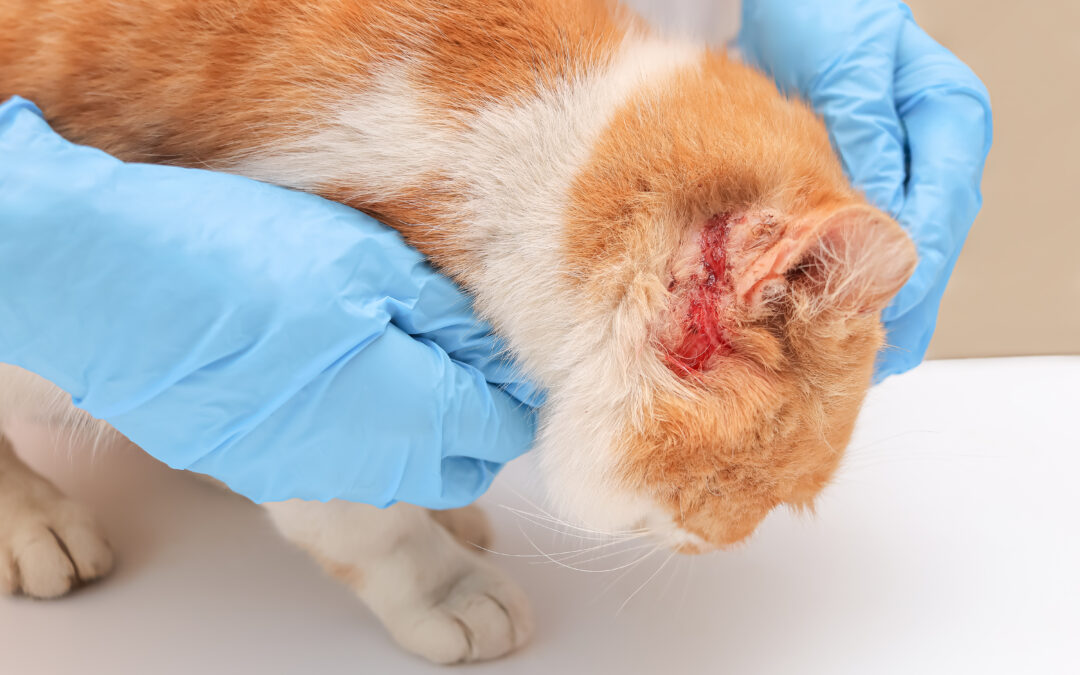
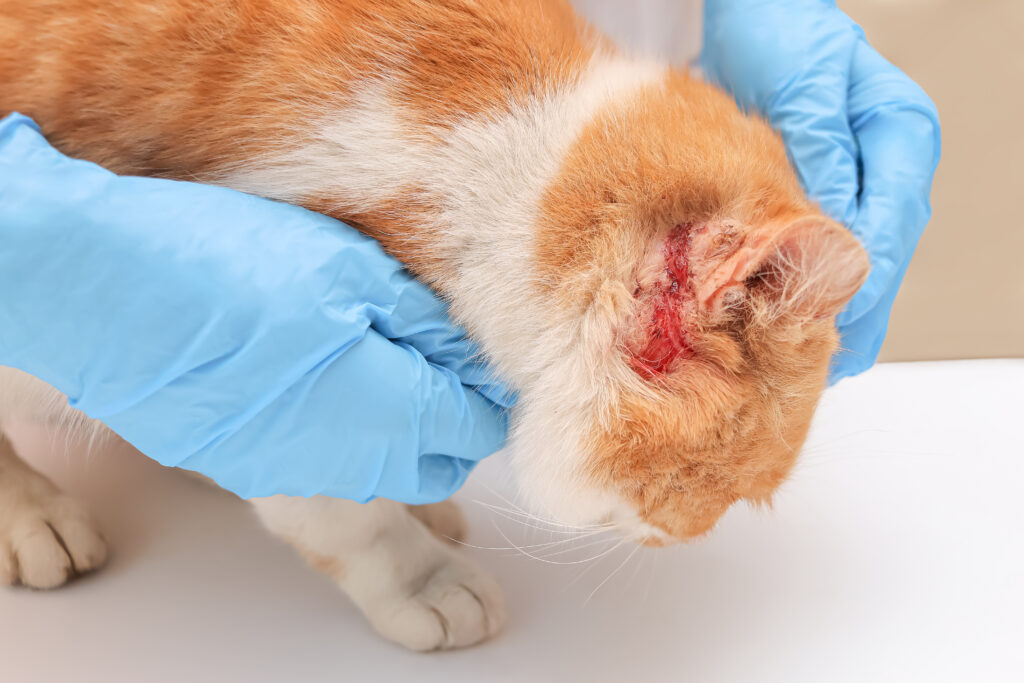
Seeing your cat bleeding can be worrying, but it’s important to stay calm and know how to handle the situation. Whether it’s a small scratch or a more noticeable injury, understanding how to deal with bleeding can help keep your cat safe and comfortable.
Things to keep in mind
- WEAR GLOVES WHEN DEALING WITH BLEEDING
- Always dispose of soiled dressings in a yellow incinerator bag.
- If your pet is bleeding the priority is to stop the blood coming out! It is not a priority to clean the wound. This should be done by the Vet in a clinical environment.
- Ideally all wounds should be seen by a Vet, however if the wound is minor and you are not planning to get it seen by a vet, then this should be carefully cleaned before it is dressed.
- You may need to carefully trim your pet’s fur around the wound so that you can properly see the extent of the damage. Ideally use curved scissors to do this to avoid accidentally cutting their skin.
- A wound can be cleaned using saline or clean water. For very dirty wounds you may wish to use an approved animal antiseptic – although a dirty wound should always be seen and treated by a vet.
- Do not use Hydrogen Peroxide as this can damage the edges of the wound and it could take longer to heal.
- All bite wounds should be seen by a Vet so they can properly assess the extent of the damage and your pet is likely to need antibiotics.
Types of bleeding
Arterial bleeding
An arterial bleed spurts under pressure from the heart, appearing bright red and frothy. An animal with an arterial bleed can lose blood very fast and quickly go into shock. It is vitally important to apply pressure fast to stop the bleeding.
Venous bleeding
Venous blood is darker than arterial blood and pours rather than spurts. Venous bleeding is easier to control than arterial bleeding.
Internal bleeding
Your pet may also experience internal bleeding, which you can recognize by signs such as coldness, restlessness, pale gums, a fast heartbeat, shallow breathing, little or no urine, dark concentrated urine, or blood in the urine. Lethargic and floppy or visible blood coming from any of their orifices. If you suspect internal bleeding it is vitally important that you get veterinary help fast.
Treatment for bleeding
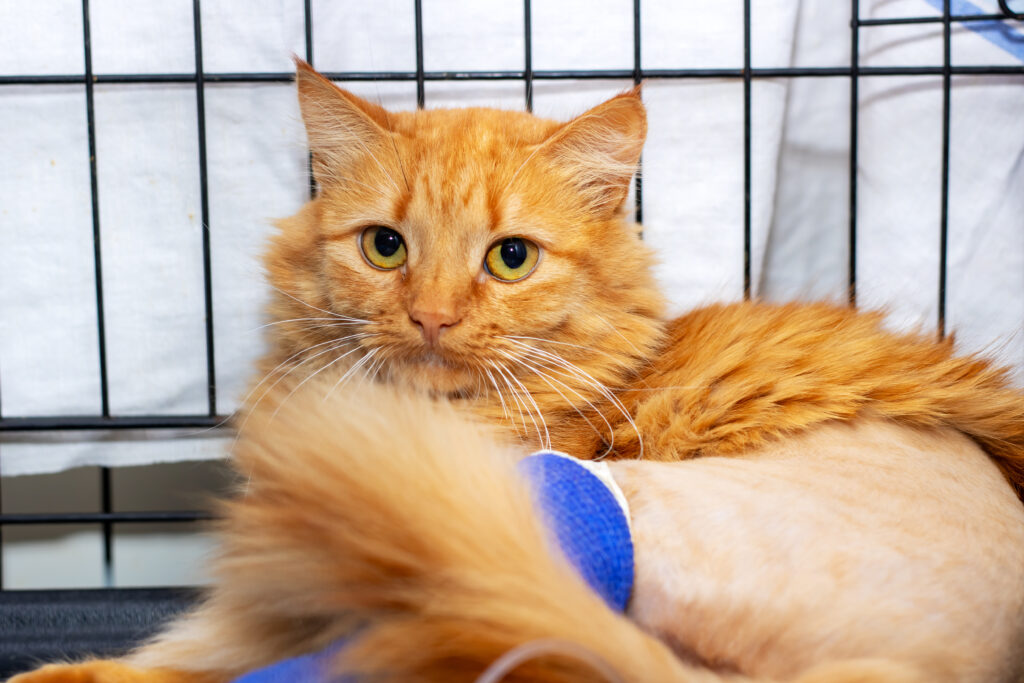
- If you are applying a bandage to your pet it is vitally important that you do not put it on too tight.
- Never bandage or try to splint a limb that you think is broken as you will make things worse. Always phone the Vet and adhere to their advice.
- If you are bandaging the lower limb, you should cover the foot. But you must ensure that you check the paw regularly to ensure that it is not swelling. If you have any concerns you must call the Vet.
- If you apply a bandage at home, a vet should check it as soon as possible.
- Never leave a bandage on for longer than 24 hours unless applied by a Vet.
- Avoid letting the bandage get wet, as this can tighten it and increase the risk of infection.
- Avoid taking your cat out in wet conditions. Your vet can often give you used IV fluid bags to help protect the bandage from getting wet.
1 – Cover the cleaned wound with a sterile dressing
Clean the wound. Use a sterile non-adherent dressing to cover the cleaned wound. Protect their claws by placing cotton wool between each toe.
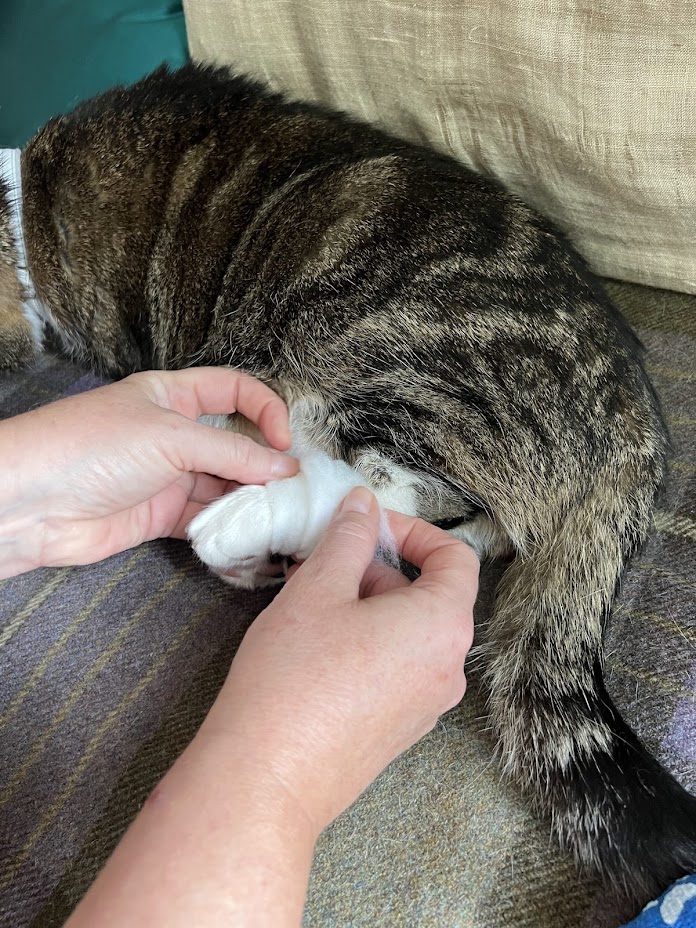
Carefully place small pieces of cotton wool between each claw, including the thumb and dew claw.
2 – Wrap cushioning bandage from paw to the next joint
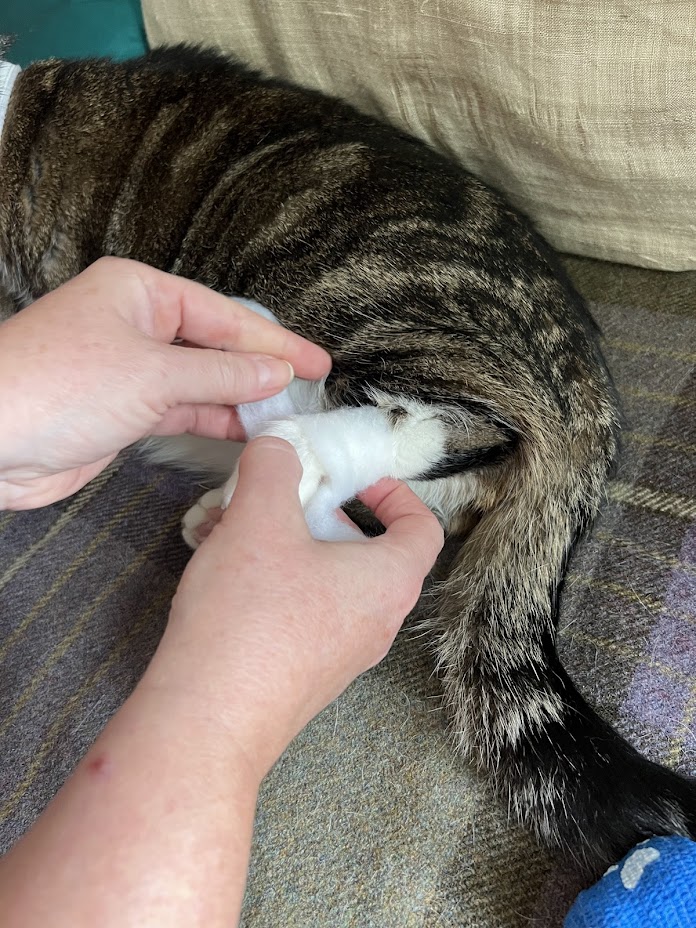
Starting at the paw cover with soft band (cushioning light weight cotton wool type bandage)
Bandage from the foot to the next joint.
Apply a layer of cohesive bandage over the top.
3 – Cover the entire bandage with a Vetwrap
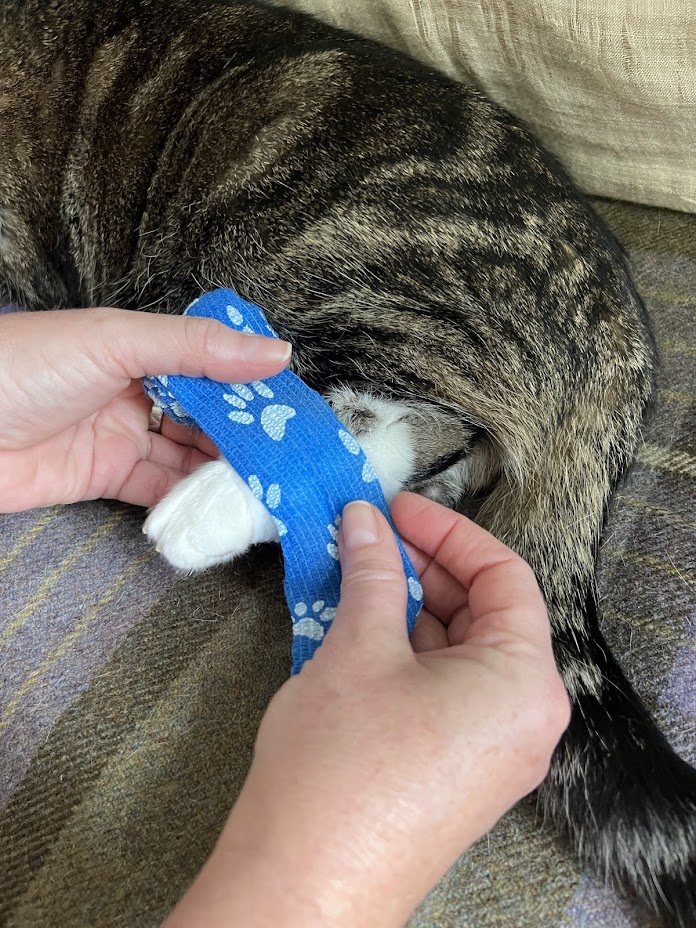
Cover the entire bandage with a Vet wrap pet bandage which is a cohesive bandage that sticks to itself as you bandage and is stronger than human bandages– ensure you are not putting it on too tight.
Start by going under the paw and take the bandage all the way up to the next joint.
Ensure the bandage is firm, but not too tight.
Continually observe to ensure their paw does not start to swell.
If worried, remove the bandage immediately.
Do not leave the bandage on for more than 24 hours.
Get veterinary advice as soon as possible.
Do not allow the bandage to get wet as it will become tighter and the wound is more likely to become infected. (Veterinary Practices often give IV bags to cover bandages).

First Aid for Pets provides this information for guidance and it is not in any way a substitute for veterinary advice. The author does not accept any liability or responsibility for any inaccuracies or for any mistreatment or misdiagnosis of any person or animal, however caused. It is strongly advised that you attend a practical First Aid for Pets course or take our online course to understand what to do in a medical emergency.