
It is very helpful to think in advance about how you would manage a medical emergency and to have some baseline measurements so you can quickly recognise when there is something wrong with your cat.
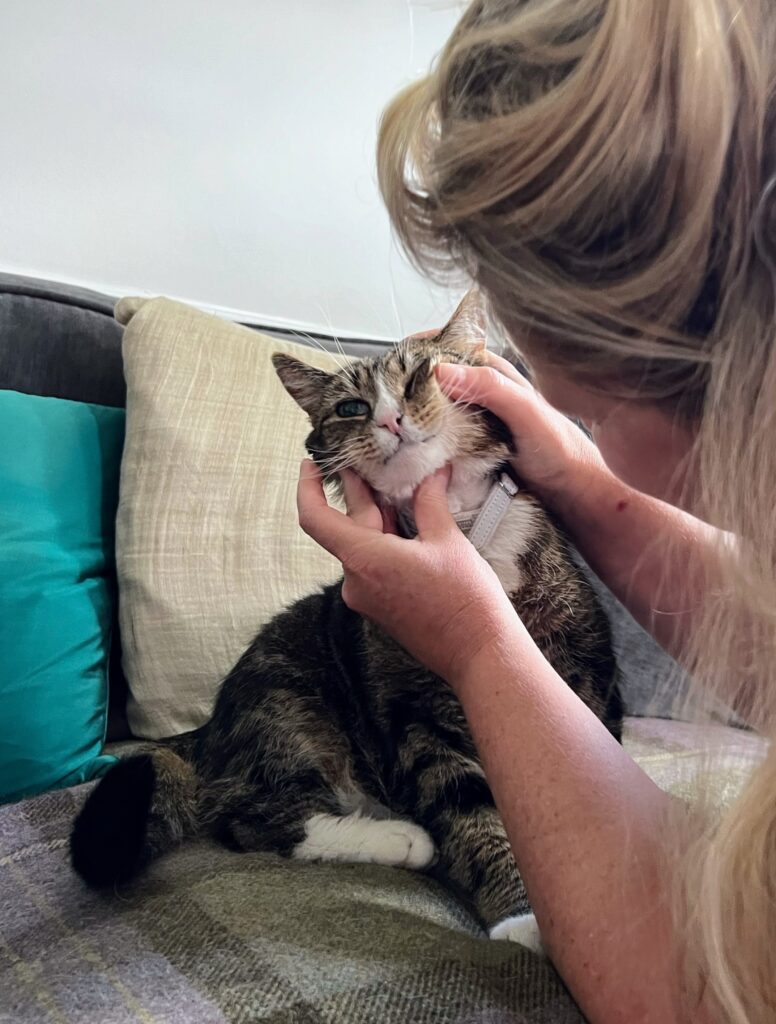
Regularly practice conducting a top to toe examination on your cat. Start with the head and systematically work down. Build up to more sensitive areas such as their eyes and other areas they may not like being scrutinised. This is really important to help avoid your pet becoming alarmed if you need to properly examine them in an emergency situation. Regular examinations should make it easier for you to swiftly spot any abnormalities.
Normal ranges for your cat’s vitals
Temperature – 100.5 to 102.5 F or 38-39.3 C
Respiratory rate 10 – 30 per minute
Pulse rate 60-140bpm
- Smaller cats tend to have a faster pulse rate possibly up to 160 bpm.
- Large cats tend to have a slower pulse rate 60-80bpm.
1. Taking your cat’s temperature
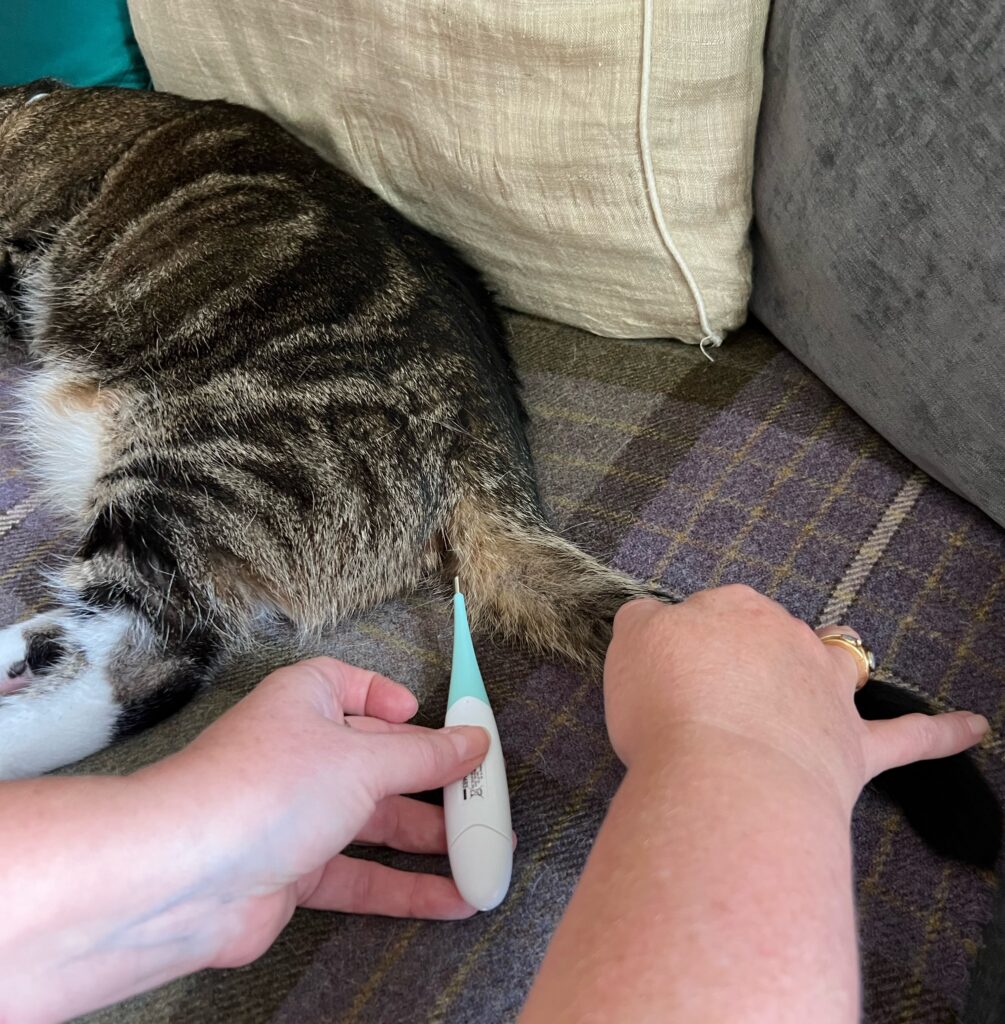
The temperature can be taken using an ordinary digital or rectal thermometer. Lubricate with some olive oil and gently insert into their anus with the end touching the inner wall of their anus. This is often easier to do when the animal is sitting, but if they are standing, use your free hand to support their stomach and prevent them from sitting.
2. Taking your cat’s pulse
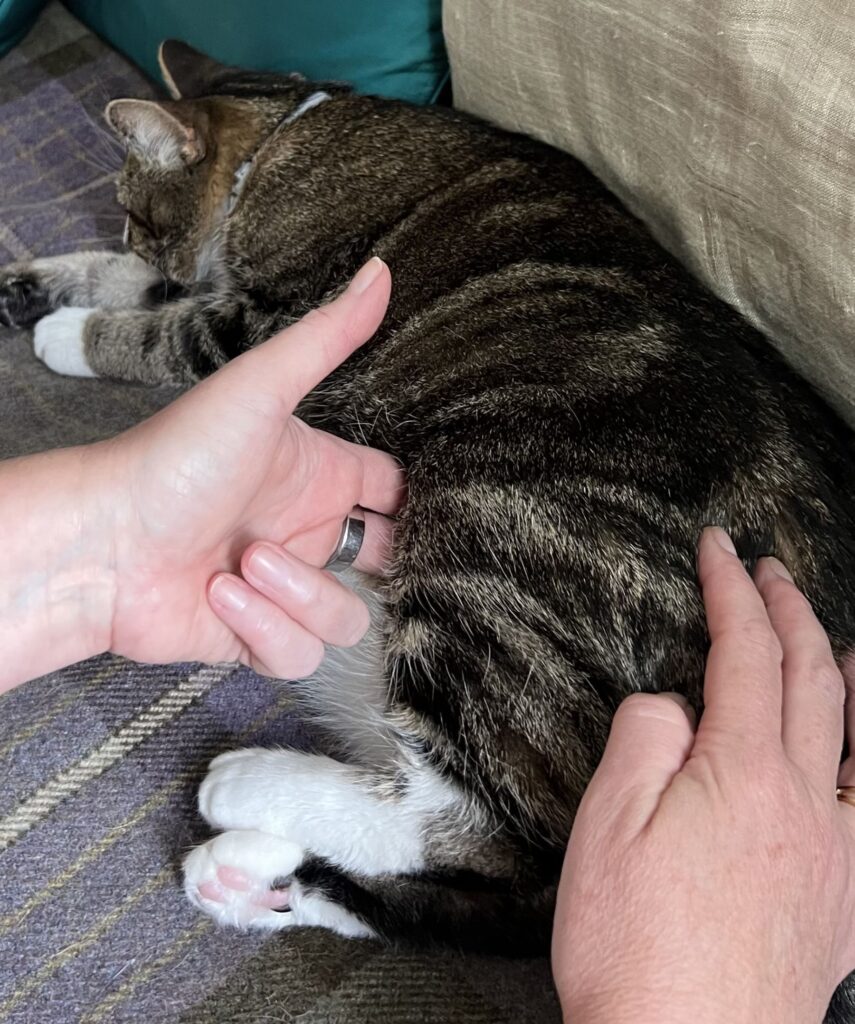
The easiest place to find the cat’s pulse is in the upper third of their thigh. Place your hand over the top of their thigh and gently squeeze your fingers just underneath their leg, you should be able to feel the artery pulsing here (your thumb has a strong pulse itself so don’t use this to take their pulse as otherwise you will be timing your own pulse rate).
The femoral pulse can be difficult to find on pets with a greater fat covering. You can also listen for a heartbeat. Time the pulse for 15 seconds and multiply the result by 4 to get the beats per minute.
3. Taking your cat’s respiratory rate
- Carefully watch the rise and fall of their chest and count the breaths for a 15 seconds
- Multiply this by 4 for the rate for 1 minute.
4. Checking your cat’s mucosal membranes
Their gums should be pinkish-red, smooth and moist – if they are not, they could be going into shock or showing signs of dehydration. Deep red sticky gums could be a sign of heat exhaustion.
5. Capillary refill time
In a healthy animal if you push down on their gums quickly and then release your finger, the colour should return almost immediately in 1-2 seconds. The time it takes for the colour to return is known as the capillary refill time. A slowness for the colour to return could indicate that the animal is going into shock.

First Aid for Pets provides this information for guidance and it is not in any way a substitute for veterinary advice. The author does not accept any liability or responsibility for any inaccuracies or for any mistreatment or misdiagnosis of any person or animal, however caused. It is strongly advised that you attend a practical First Aid for Pets course or take our online course to understand what to do in a medical emergency.