
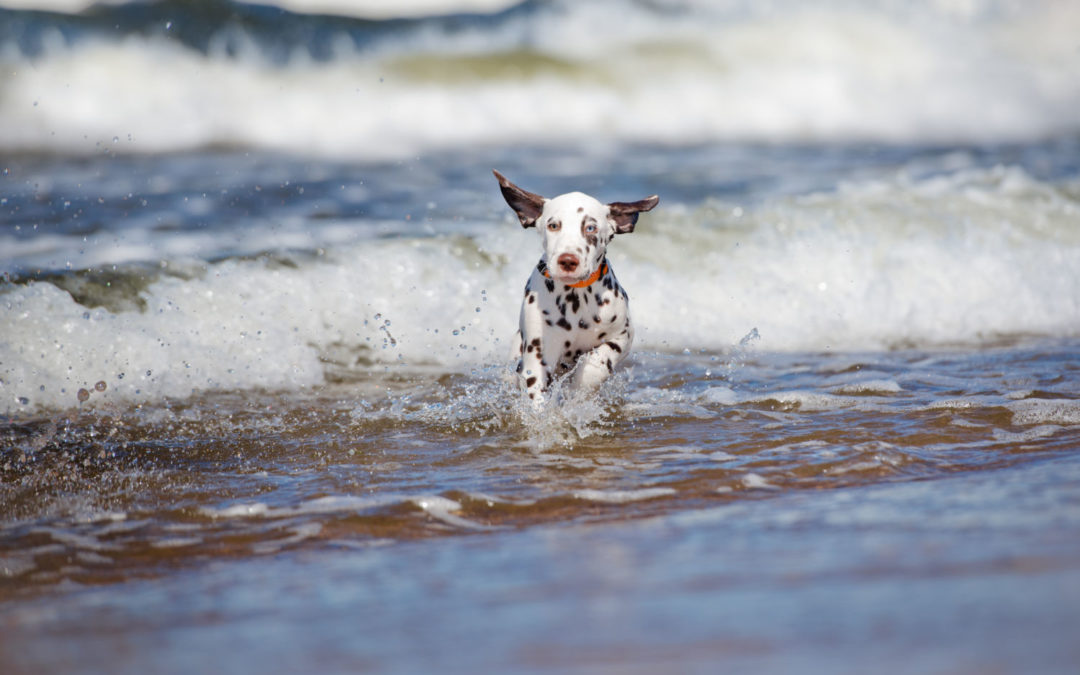
Summer water safety checklist for dogs
Over the warm summer months, taking your dog on holiday with you often means they are exposed to much more water than usual. From walking by the sea, hiring a place with a pool or taking your pet on a boating holiday, these are some key tips to remember to keep your pet safe when on or around water.
Firstly, remember not all dogs can swim and even those that are able to swim can still get into trouble.
Steep and slippery
Some dogs, due to their age or conditions such as arthritis, find getting out of the water difficult, especially when they are tired after a swim. Dogs may discover it is tricky to get themselves out of the water because the sides of the pond, river or lake are too steep or very slippery. Or they could simply get stuck in the sand, mud or underwater weeds.
Choppy water
If your pet goes into the sea where there is a strong current or choppy water, they may tire more quickly. Dogs don’t understand about preserving their energy by treading water, so if they are in the water they keep swimming, which means they will tire more quickly than a person in the same situation.
Take the lead
Prevention is key to avoiding this situation happening in the first place. Always be extra cautious when you are near water with your dog. If you feel they might make a dash for it, make sure you put them on the lead until you are at a safe distance.
Cold water shock
Be aware that a sudden temperature change can affect dogs just as it can humans and the difference between a scorching hot summer day and cold water can lead to cold water shock in pets, too.
Open water
Even if your dog is a strong swimmer, you’ll still need to make sure they always wear a life jacket if you’re taking them out on a boat. Not only will it help them to float if they fall in, it will also give people trying to save them something to grab onto.
Remember that dogs are much heavier in water than on land and may struggle – so ensure you have the strength to get them out of the water, should they need help.
Fresh water
Salt water isn’t good for dogs to drink – and ponds can be contaminated too, so always ensure you travel with fresh water, to avoid them drinking from somewhere they shouldn’t. Don’t let your dog swim in any ponds with dangerous blue-green algae as this is incredibly toxic to dogs and humans.
Secondary drowning
Dogs can suffer from secondary drowning, as can humans, so even if your dog appears to make a full recovery but they were unconscious in the water, then they do need to be seen by a vet.
How to help a drowning pet
Whatever the circumstances, it’s good to know how to help your dog, should they need it.
Remember never risk your life for a drowning pet. Do not go into dangerous water (cold/icy water, fast running water, water with a strong current, any water where you don’t know the depth etc) to rescue your dog.
If you find your pet unconscious in water:
- Check the mucous membranes for a grey or bluish discolouration which would mean they are cyanosed and your pet has been deprived of oxygen.
- Check for breathing
- If they are not breathing and you are able to do this; hold your pet upside down and gently shake them as this can encourage them to breathe on their own.
- Alternatively put them onto their right hand side with their head lower than their body.
- Locate the last ribs and push into the dent beside these in an upward motion towards their head to try and force out any weed or water and encourage them to breathe.
- Repeat this 4 or 5 times for up to a minute
- If they do not begin to come round or start breathing and there is no pulse, start rescue breaths and then if appropriate, CPR. Click here to find out more about CPR for dogs.
Following our handy water safety checklist should ensure you can continue to enjoy many happy times with your dog around water this summer.
And to read our summer water safety checklist for humans click here
First Aid for Pets provides this information for guidance and it is not in any way a substitute for veterinary advice. The author does not accept any liability or responsibility for any inaccuracies or for any mistreatment or misdiagnosis of any person or animal, however caused. It is strongly advised that you attend a practical First Aid for Pets course to understand what to do in a medical emergency.